
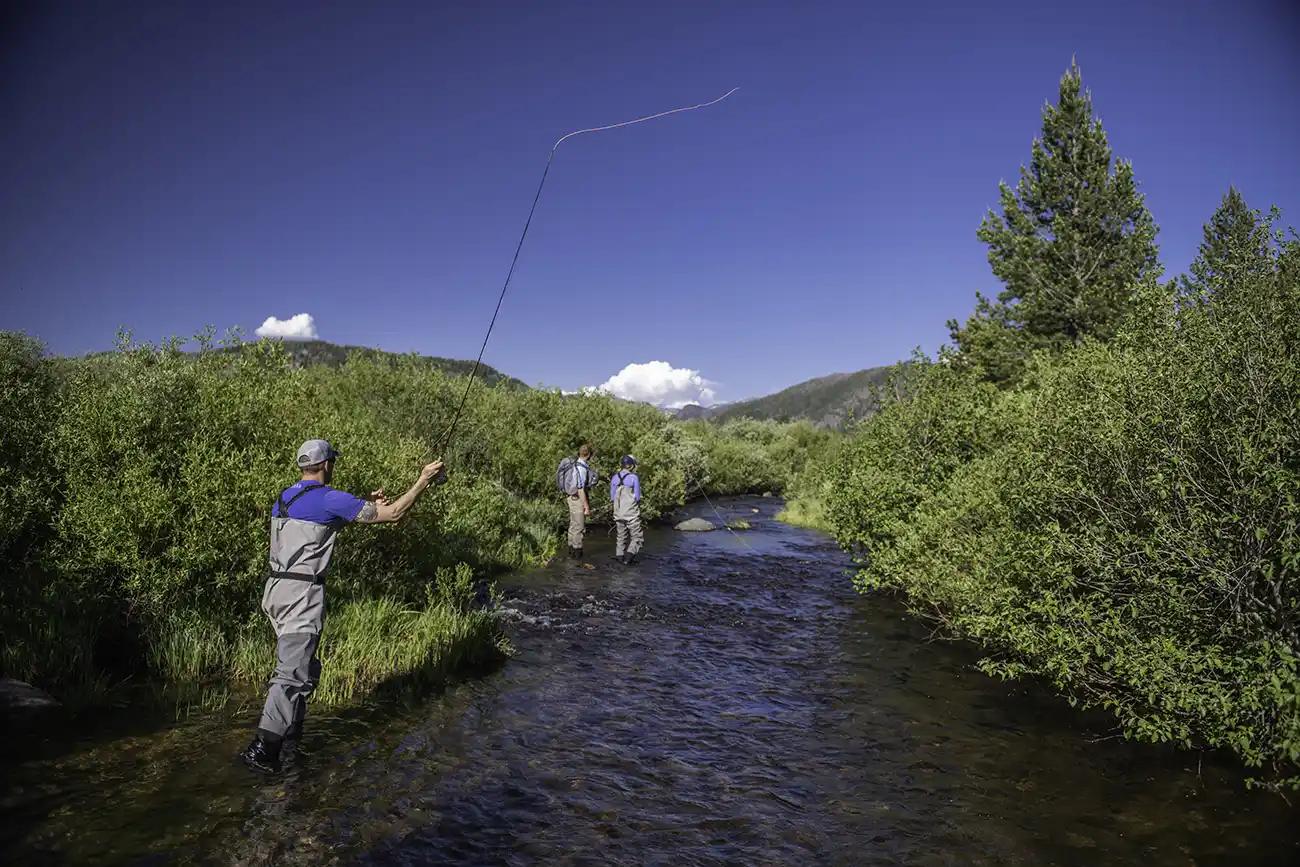
The Elk River runs cold, clear, and full of trout. Here’s exactly what’s in the water — by species, by season, and by what your guide will tell you before you ever make a cast.
Vista Verde fly fishing at a glance
Guided access to the Elk River near Clark, Colorado, in Routt National Forest. Primary species: Rainbow Trout, with Brown Trout and occasional stocked Cutthroat. All gear and waders provided. Guided half-day and full-day sessions. All-inclusive — fly fishing is included in your stay, no additional booking required.
The Fish: What’s Actually in the Elk River
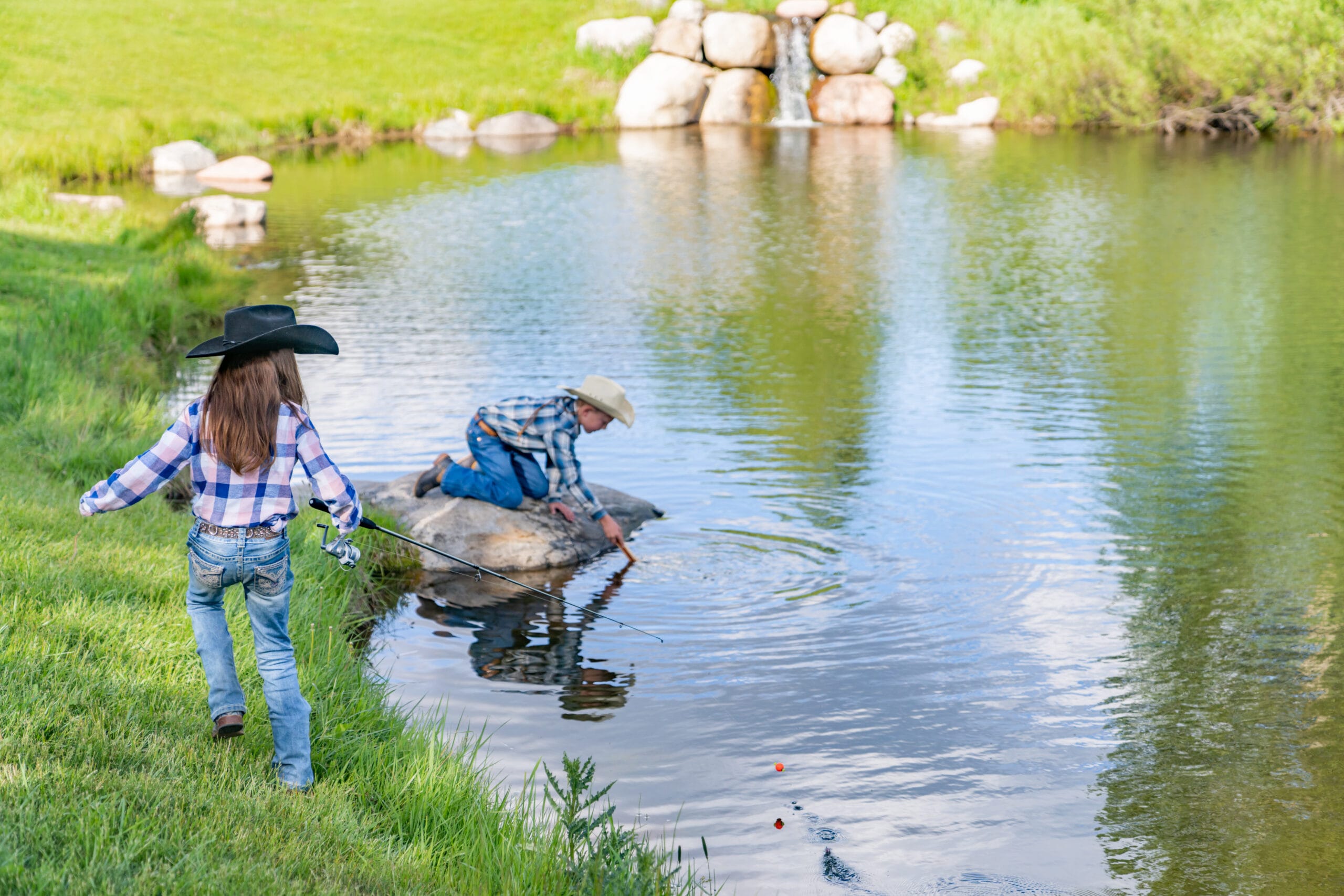
The Elk River is a freestone stream fed by snowmelt and springs tumbling out of the Zirkel Wilderness. It runs through the heart of Vista Verde’s property before joining the broader watershed near Steamboat Springs — and the species mix here is a little different from what many guests expect.
Rainbow Trout — The River’s Most Common Catch
Rainbow Trout are the fish you’re most likely to catch on the Elk River, and by a wide margin. They’re fast, acrobatic, and considerably less selective than their reputation in other rivers might suggest — a hooked Rainbow will often clear the water before your guide has finished giving you instructions. For first-time fly fishers, that first airborne fish is the moment the whole sport makes sense.
Rainbows in the Elk typically run 12 to 18 inches, with larger fish in the 18 to 22-inch range showing up in deeper holding water. They’re most active June through August, when terrestrial insects start falling onto the water and dry-fly fishing becomes most accessible.
Brown Trout — Less Common, Still Worth Knowing
Brown Trout are present in the Elk River but in smaller numbers than Rainbows, and the average fish runs smaller than many guests expect — typically 8 to 10 inches. That said, the river does hold larger Browns in the 16 to 20-inch range in its deeper pools, and a Brown of that size taking a dry fly on a quiet evening is a genuinely memorable catch precisely because it isn’t the norm.
Brown Trout become more active in September and October, when cooling water temperatures and pre-spawn instincts sharpen their behavior. This is when streamers come out, and it’s the best window for guests specifically hoping to land one of the river’s larger Browns.
Cutthroat Trout — A Seasonal Bonus
In years when the river is stocked, Cutthroat Trout can be a genuine highlight of a Vista Verde fishing trip — guests have reported excellent numbers of 12 to 14-inch Cutthroat in stocked seasons. Stocking varies year to year, so ask your guide what the current season looks like before you arrive; they’ll know immediately whether it’s a strong Cutthroat year.
Brook Trout — Off-Property, By Request
Brook Trout are no longer easily accessible directly on Vista Verde’s property. Guides do still take guests to nearby Hinman Creek for Brook Trout, but it’s a different kind of outing — one that rewards accurate casting and comfort navigating a smaller, more technical stream. If catching Brook Trout specifically is a priority for your visit, mention it to your guide and they can plan a Hinman Creek excursion.
Vista Verde is actively working on habitat improvements at Hinman Creek to make this water easier to access in future seasons — so this is an experience that may become more readily available over time.
| Species | Average Size | Trophy Size | Peak Season | Character |
|---|---|---|---|---|
| Rainbow Trout (Oncorhynchus mykiss) | 12–18″ | 18–22″ | June–Aug | The Elk River’s most common catch. Aggressive, acrobatic, and found in good numbers throughout the system. |
| Brown Trout (Salmo trutta) | 8–10″ | 16–20″ | Sept–Oct | Less common than Rainbow in the Elk, but the larger specimens are some of the most satisfying fish in the river. |
| Cutthroat Trout (Oncorhynchus clarkii) | 12–14″ | 14+” | Varies by year | Present in good numbers in years when the river is stocked. Ask your guide about current-season Cutthroat activity. |
Where You’ll Fish: The Elk River
Vista Verde sits along the Elk River — meaning guided access without crowded public access points, and guides who have spent seasons learning every seam and undercut bank on this water. The river has character that changes as you move along it.
| River Character | What’s There | Best For | Notes |
|---|---|---|---|
| Slow, deep runs near the lodge | Easiest wade access on the property. Calm water, overhanging banks. | Beginners, first casts | Where guides typically start a session — easy footing, forgiving casting room. |
| Fast riffles into open flats | Classic dry-fly water once summer flows drop. | Experienced anglers, hopper season | Best water for hopper-dropper rigs July–August. |
| Deep bends with structure | Holding water for the river’s larger fish. | Streamer fishing | Most productive in fall as fish become more active pre-spawn. |
When to Fish: The Elk River Hatch Calendar
Fly fishing on the Elk River changes month by month as water temperature shifts and different insect species hatch. Your guide will know exactly what’s coming off the water the morning you arrive — but here’s what to expect across the season so you can plan accordingly.
| Month | Primary Hatch | Fly Patterns | Best Species | Typical Fish Size |
|---|---|---|---|---|
| April | Blue-Winged Olive (BWO) Midges | Parachute Adams #18–20 RS2 #20–22 Midge Larva #22 | Rainbow Trout | 10–14″ |
| May | Caddis (early) PMD (start) | Elk Hair Caddis #14–16 Hare’s Ear #14 PMD Emerger #16 | Rainbow Trout | 10–16″ |
| June | Green Drake PMD (peak) Caddis | Green Drake #10–12 PMD Cripple #16 X-Caddis #14 | Rainbow Trout | 12–18″ |
| July | PMD (late) Yellow Sally Terrestrial (start) | Pale Morning Dun #16 Yellow Sally #14 Hopper #8–10 | Rainbow Trout | 12–18″ |
| August | Terrestrials (peak) Trico (morning) | Dave’s Hopper #8–10 Paul’s Hopper #8 Beetle #14 Ant #16 | Rainbow Trout | 12–18″ |
| September | BWO (return) Trico Streamer season | Parachute BWO #18 Woolly Bugger #6 Streamer #4–6 | Rainbow & Brown | 10–16″ |
| October | BWO (late season) Midge Streamers | Griffith’s Gnat #20 Woolly Bugger #4–6 Mink Streamer #4 | Rainbow & Brown | 10–18″ |
Best overall visit for fly fishing
Late June through July offers the widest range of hatch activity and the most forgiving conditions for guests of all experience levels. September and October are best for guests hoping to target the river’s larger Brown Trout on streamers.
What It’s Like to Fish With a Vista Verde Guide
The difference between fishing a river and learning a river is a good guide. Vista Verde’s fly fishing guides are not rental equipment desk staff — they are dedicated anglers who fish this water all season, who know what’s likely to be working on a given morning, and who have a specific talent for reading a guest’s casting stroke and fixing it in twenty minutes.
The Morning
You’ll meet your guide at the rod rack before breakfast, which is the first thing that surprises people — the flies are already tied, the leaders are already built, and your guide has already checked conditions. By the time you pull on waders, you have a plan.
The walk to the water is part of it. Your guide will point out what’s moving along the bank before you’ve made your first cast, and explain where the fish are likely holding and why. By the time you step into the river, you understand the water a little better than you did ten minutes earlier.
Your First Cast
If you’ve never fly fished before, your guide will spend real time on the bank teaching you before you wade in — not theory, but actual casting, with specific feedback, until your loop is good enough to reach the water where the fish are holding.
Vista Verde’s guides put a real emphasis on teaching the fundamentals of fly fishing — how to read water, how to present a fly, how to set the hook — because, as the guide team likes to put it, it’s not always guaranteed you’ll catch a fish. That’s precisely why it’s called fishing, not catching. The goal of your first morning isn’t a guaranteed fish; it’s leaving with the skills to actually fish well, with or without a guide, for the rest of your life.
The Moment the Fish Takes
There is a specific sound a rising trout makes — a soft, deliberate sip that carries across still water in a way that stops everything. Your guide will often hear it before you do and point you toward it. You mend your line, the fly settles into the seam, and then — if the fish commits — it takes.
What happens next depends on the fish. A Rainbow will often run and jump. A Brown will go deep and test your rod differently. Either way your guide is talking you through it — keep the tip up, let it run, now — until the fish comes to hand. You hold it for a moment in the cold current before it kicks away, and the river looks a little different to you after that.
Catch and Release
All fishing at Vista Verde is catch and release, and the guides take it seriously — careful handling, quick returns, fish-friendly gear. The fish you cast to in June will still be in the river in September. That’s how it stays good water, season after season.
What’s Included — and What to Bring
Fly fishing at Vista Verde is fully included in your all-inclusive stay. There is no additional booking, no gear rental charge, and no guide gratuity policy buried in the fine print. What’s provided:
- Fly rods, reels, and lines — matched to the water and the season
- Waders and wading boots — fitted before your session
- All flies — selected by your guide each morning based on current conditions
- Instruction for beginners — included as part of every guided session
- Catch-and-release gear — net, forceps, fish-friendly handling
If you have your own rod and want to bring it, your guide will happily fish alongside you with your gear. A 9-foot, 5-weight is a solid all-around choice for the Elk River.
Frequently Asked Questions
The Elk River is home primarily to Rainbow Trout, which are the most commonly caught species and typically run 12 to 18 inches, with larger fish reaching 18 to 22 inches. Brown Trout are present in smaller numbers, averaging 8 to 10 inches, though the river holds larger Browns in the 16 to 20-inch range. In years when the river is stocked, Cutthroat Trout in the 12 to 14-inch range are also commonly caught.
No experience is required. Vista Verde’s guides work with complete beginners regularly and focus on teaching the fundamentals of fly fishing — casting, reading water, and presentation. Catching a fish is never guaranteed (it’s called fishing, not catching), but you’ll leave with real skills regardless of how many fish you land.
Late June through July offers the widest hatch activity and the most accessible dry-fly fishing for guests of all experience levels. September and October are the best months for guests hoping to target the Elk River’s larger Brown Trout, fished with streamers as the water cools.
All gear is provided as part of your all-inclusive stay — rods, reels, waders, boots, and flies selected daily by your guide. There is no additional charge. If you own a fly rod and prefer to fish with your own gear, you are welcome to bring it.
Yes. Guided fly fishing is fully included in Vista Verde’s all-inclusive rate, along with all meals, lodging, and other guided activities. There are no gear rental fees or guide gratuity requirements added to your stay.
Vista Verde guides guests on the Elk River near Clark, Colorado, in Routt National Forest north of Steamboat Springs. Guests interested in Brook Trout specifically can ask their guide about an excursion to nearby Hinman Creek, a technical stream that requires accurate casting and stream navigation.
Author Bio
Erin Brosterhous leads the marketing efforts at Vista Verde Ranch and brings more than 20 years of experience working with creative teams in the hospitality, outdoor, and travel industries. A fourth-generation Colorado native, Erin is passionate about sharing stories of outdoor adventure, authentic ranch experiences, and mountain living all the while raising her husband and two kids in Steamboat Springs, Colorado.